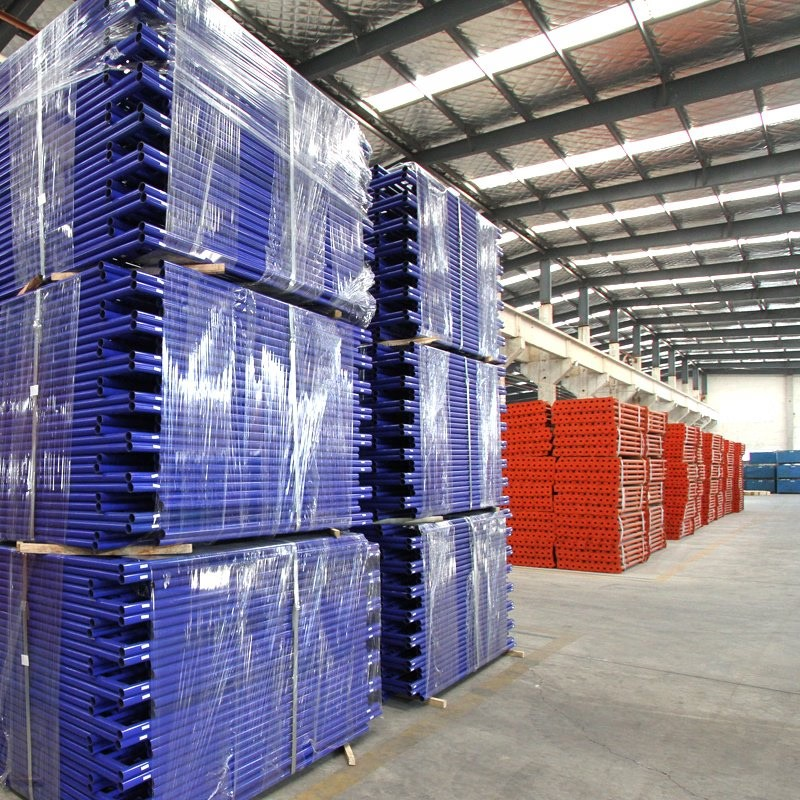
Plastic Pallets for Warehousing & Logistics
Plastic pallets for warehousing and logistics are designed to support the movement, storage and distribution of goods through modern supply chains.
They can be used for receiving, internal transportation, storage, order preparation, distribution and recurring logistics operations.
Palmal Paletes supplies plastic pallet solutions for warehouses, manufacturers, distributors, logistics companies and commercial buyers across Portugal and Europe. plastic pallets for warehousing
Depending on the application, plastic pallets can be available in different dimensions, deck configurations, load capacities and handling designs.
Request a quotation based on your required pallet size, quantity, application and delivery location.
Plastic Pallets for Warehouse Operations
Plastic pallets can support multiple stages of a warehouse operation.
Typical applications include:
- Goods receiving
- Internal material movement
- Inventory storage
- Order picking
- Cross-docking
- Finished-product handling
- Distribution
- Dispatch
- Returnable logistics
- Loading and unloading
- plastic pallets for warehousing
The correct pallet should be selected according to the goods, warehouse equipment and storage configuration.
Plastic Pallet Specifications for Warehousing
Pallet specifications vary according to the model.
| Specification | Considerations |
|---|---|
| Material | Plastic / polymer construction |
| Condition | New |
| Dimensions | Standard and application-specific formats |
| Deck | Solid or ventilated |
| Entry | 2-way or 4-way, model dependent |
| Static load | Product dependent |
| Dynamic load | Product dependent |
| Racking load | Product dependent |
| Handling | Forklift and/or pallet truck compatible, model dependent |
| Nestable | Available on selected models |
| Stackable | Available on selected models |
| Rackable | Available on selected reinforced models |
| Surface | Smooth or textured, depending on model |
| Cleaning | Product and application dependent |
| Moisture resistance | Suitable for many humid environments |
| Reusability | Many models designed for repeated use |
| Automation | Compatibility must be confirmed for the specific model |
| Temperature resistance | Product dependent |
| Colour | Depends on availability |
Always verify the manufacturer’s technical specification before using a pallet in a specific storage system.
Why Use Plastic Pallets in Warehouses?
Consistent Dimensions
Plastic pallets are manufactured to defined dimensions, which can provide consistency across repeated warehouse operations.
Consistent dimensions can be particularly useful for:
- Storage planning
- Pallet positioning
- Material handling
- Conveyor systems
- Automated warehouse equipment
- Transport planning
- plastic pallets for warehousing
The exact dimensional tolerance and automation compatibility depend on the pallet model.
Moisture Resistance
plastic pallets for warehousing are suitable for many environments where exposure to humidity or water may occur.
They can be considered for:
- Cold storage
- Wet production areas
- Loading docks
- Refrigerated warehouses
- Food logistics
- Outdoor staging
Environmental and temperature resistance should be confirmed for the selected pallet.
Easy Cleaning
Many plastic pallets for warehousing designs have surfaces that can be easier to clean than wooden pallets.
This can be useful where pallets are exposed to:
- Dust
- Dirt
- Water
- Food residues
- Warehouse contaminants
- Cleaning procedures
For specialised hygienic applications, select a pallet designed for the relevant operating environment.
Plastic Pallets for Material Handling
plastic pallets for warehousing must work with the equipment used to move them.
Depending on the pallet design, handling may include:
- Forklifts
- Hand pallet trucks
- Electric pallet trucks
- Stackers
- Conveyors
- Automated guided vehicles
- Robotic handling systems
Not every plastic pallet is compatible with every piece of equipment.
Before ordering, confirm:
Pallet + handling equipment + load + storage system
as one complete configuration.
Plastic Pallets for Forklift Operations
Forklift compatibility is an important consideration for warehouse pallets.
When selecting a pallet, check:
- Fork entry
- Pallet construction
- Load distribution
- Maximum load
- Fork spacing
- Pallet dimensions
- Handling environment
A pallet designed for forklift handling should still be operated according to the manufacturer’s load and handling instructions.
Plastic Pallets for Pallet Trucks
plastic pallets for warehousing can be available with configurations suitable for pallet trucks.
Consider:
- Entry configuration
- Bottom-deck design
- Pallet weight
- Load capacity
- Pallet truck dimensions
For frequent manual movement, pallet weight and ease of handling can be important factors.
Plastic Pallets for Pallet Racking
Some plastic pallets are specifically designed for use in pallet racking.
However, not all plastic pallets are rackable.
For racking applications, confirm:
- Rated racking load
- Rack beam configuration
- Pallet dimensions
- Pallet support points
- Deflection characteristics
- Load distribution
- Warehouse safety requirements
The pallet specification should be compatible with the exact racking system.
Nestable Plastic Pallets for Warehouses
Nestable pallets can be useful when empty pallets need to be stored efficiently.
An empty nestable pallet can fit within another pallet, depending on the design.
Potential benefits include:
- Reduced empty-pallet storage volume
- Easier handling
- More efficient return transport
- Reduced warehouse space requirements
Nestable pallets can be particularly useful for businesses that regularly accumulate empty pallets.
Stackable Plastic Pallets
Stackable pallets can be used where loaded or empty pallets need to be stored vertically.
When stacking pallets, consider:
- Load weight
- Pallet design
- Product stability
- Floor condition
- Pallet stacking height
- Warehouse safety procedures
- plastic pallets for warehousing
Only stack pallets according to the manufacturer’s specification and the warehouse’s safety requirements.
Plastic Pallets for Automated Warehouses
Modern distribution centres increasingly use automated material-handling systems.
plastic pallets for warehousing can be considered for applications involving:
- Roller conveyors
- Chain conveyors
- Automated storage and retrieval systems
- Robotic handling
- Conveyor transfers
- Automated picking
However, automation requires precise pallet compatibility.
Before purchasing, verify:
- Pallet dimensions
- Weight
- Bottom-deck configuration
- Surface characteristics
- Conveyor compatibility
- Load stability
- Dimensional tolerances
A general-purpose plastic pallets for warehousing should not automatically be assumed to be suitable for automated handling.
Plastic Pallets for Distribution Centres
Distribution centres require pallets that can move efficiently between receiving, storage and dispatch.
Plastic pallets can be used for:
Receiving → Storage → Picking → Consolidation → Dispatch
They may also be incorporated into recurring distribution networks where pallets move repeatedly between locations.
For returnable operations, see our Reusable Plastic Pallets page.
Plastic Pallets for Cross-Docking
Cross-docking operations involve moving goods rapidly through a facility with limited or no long-term storage.
Plastic pallets can be considered where consistent dimensions and efficient handling are important.
Potential applications include:
- Retail distribution
- Wholesale logistics
- Food distribution
- Manufacturing distribution
- Regional logistics
The pallet should be compatible with the facility’s handling equipment and transport configuration.
Plastic Pallets for Manufacturing Warehouses
Manufacturing businesses can use plastic pallets for movement between production, storage and distribution.
Applications can include:
- Raw materials
- Components
- Packaging
- Finished products
- Production-line movement
- Internal transport
- Dispatch
For heavier industrial loads, consider a dedicated Heavy Duty Plastic Pallet specification.
Plastic Pallets for Food Warehouses
Plastic pallets can be useful in food-related warehousing because selected models can be cleaned and reused.
However, general plastic pallet construction does not automatically mean food grade or food-contact approved.
For food environments, consider:
- Cleaning requirements
- Material suitability
- Surface design
- Temperature
- Hygiene procedures
- Food-contact requirements
See our Food Grade Plastic Pallets page for dedicated food applications.
Hygienic Plastic Pallets for Warehouses
Warehouses handling food, beverages, pharmaceuticals or other hygiene-sensitive goods may require specialised pallet designs.
Hygienic plastic pallets can provide features such as:
- Washable surfaces
- Moisture resistance
- Consistent construction
- Reduced material absorption
- Reusability
The exact hygiene requirements should be defined before selecting a pallet.
See our Hygienic Plastic Pallets page.
Heavy-Duty Plastic Pallets for Warehousing
Heavy-duty plastic pallets can be considered when warehouse operations involve substantial loads or demanding handling conditions.
Applications may include:
- Industrial products
- Machinery
- Heavy components
- Bulk packaged goods
- Manufacturing materials
- Heavy distribution cargo
Always distinguish between:
Static load: load when the pallet is stationary.
Dynamic load: load while being moved.
Racking load: load supported by a pallet in a racking system.
These three values can differ substantially.
Plastic Pallets vs Wooden Pallets for Warehouses
| Feature | Plastic Pallets | Wooden Pallets |
|---|---|---|
| Dimensional consistency | Generally consistent | Can vary |
| Moisture resistance | Generally high | Depends on wood and treatment |
| Cleaning | Generally easier | More difficult |
| Reusability | Many models designed for repeated use | Depends on condition and design |
| Repairability | Usually limited compared with wood | Many models can be repaired |
| Initial cost | Often higher | Often lower |
| Weight | Model dependent | Model dependent |
| Racking | Selected models | Widely used, specification dependent |
| Automation | Selected models | Application dependent |
| Customisation | Model dependent | Highly customisable |
The best choice depends on the warehouse’s operating requirements, handling equipment and total cost structure.
How to Choose Warehouse Plastic Pallets
1. Measure Your Goods
Determine:
- Product length
- Product width
- Product height
- Total palletised weight
2. Select the Pallet Dimensions
The pallet should fit the goods and the warehouse’s handling and storage systems.
3. Check Load Capacity
Review:
- Static load
- Dynamic load
- Racking load
Do not use a static capacity as a substitute for a racking or dynamic capacity.
4. Check Handling Equipment
Confirm compatibility with:
- Forklifts
- Pallet trucks
- Conveyors
- Stackers
- Automated equipment
5. Review Storage Method
Determine whether pallets will be:
- Floor stacked
- Rack stored
- Nested
- Stacked empty
6. Consider the Environment
Review exposure to:
- Moisture
- Water
- Cold
- Heat
- Cleaning chemicals
- Outdoor conditions
7. Consider Reusability
If pallets will repeatedly circulate through your warehouse and distribution network, a reusable design may be appropriate.
Warehouse Plastic Pallet Dimensions
The correct pallet dimensions depend on the goods and logistics system.
When selecting a size, consider:
- Warehouse aisle configuration
- Rack dimensions
- Conveyor dimensions
- Forklift equipment
- Truck dimensions
- Container dimensions
- Product packaging
- Customer requirements
Do not choose a pallet solely because it is a commonly used size. The pallet should fit the complete logistics operation.
Plastic Pallets for European Logistics
European warehouses can use plastic pallets for domestic and cross-border logistics.
They can be incorporated into:
- Manufacturing supply chains
- Distribution networks
- Retail logistics
- Industrial supply
- Warehousing
- Export operations
For businesses operating across multiple European locations, standardising pallet dimensions can simplify handling and inventory management.
Plastic Pallets in Portugal
Palmal Paletes supplies pallet solutions for commercial customers in Portugal.
Plastic pallets can be considered for:
- Warehouses
- Manufacturers
- Distributors
- Logistics companies
- Retail operations
- Food businesses
- Industrial companies
Availability and delivery depend on the selected pallet, quantity and destination.
For a quotation, provide the required pallet specification and delivery location.
Wholesale Plastic Pallets for Warehouses
Commercial buyers can request quotations for larger pallet requirements.
Wholesale enquiries may include:
- Warehouse operators
- Distribution companies
- Manufacturers
- Logistics providers
- Retailers
- Importers
- Exporters
- Industrial companies
For recurring requirements, provide estimated order volumes and delivery frequency where possible.
Ordering Plastic Pallets for Your Warehouse
Step 1 — Send Your Requirements
Provide:
- Pallet dimensions
- Quantity
- Product/load weight
- Handling equipment
- Storage method
- Delivery location
Step 2 — Specification Review
We assess the required pallet configuration against the stated application.
Step 3 — Quotation
A commercial quotation is prepared according to the selected pallet, quantity and delivery requirements.
Step 4 — Confirmation
Once the commercial terms are agreed, the order is processed according to the confirmed terms.
Step 5 — Logistics
Delivery or collection arrangements are coordinated according to the confirmed order.
Frequently Asked Questions
What are plastic pallets used for in warehouses?
Plastic pallets can be used for receiving, storage, internal handling, order preparation, cross-docking and distribution.
Are plastic pallets suitable for pallet racking?
Some are. Rackability must be confirmed for the specific pallet model and racking system.
Are all plastic pallets suitable for forklifts?
Not necessarily. Forklift compatibility depends on pallet construction and entry configuration.
Can plastic pallets be used with pallet trucks?
Selected models are compatible with pallet trucks. The pallet and equipment dimensions should be checked before purchase.
Are plastic pallets suitable for automated warehouses?
Some models are designed for automated handling systems. Conveyor and automation compatibility should always be confirmed for the exact model.
Can plastic pallets be stacked?
Some designs are suitable for stacking. Stacking limits and operating conditions should follow the manufacturer’s specification.
Are nestable plastic pallets good for warehouse storage?
Nestable pallets can be useful when empty pallet storage space is limited because empty pallets can occupy less volume.
Are warehouse plastic pallets reusable?
Many plastic pallets are designed for repeated use. Actual service life depends on construction, load, handling and environmental conditions.
Can plastic pallets be used in cold storage?
Selected plastic pallets can be suitable for cold-storage environments. Temperature performance should be confirmed for the exact model.
Are plastic pallets suitable for food warehouses?
Selected models may be suitable, but food-grade or food-contact suitability must be confirmed for the intended application.
What information should I provide when requesting a warehouse pallet quotation?
Provide the required dimensions, quantity, load weight, application, handling equipment, storage method and delivery location.
Request a Quote for Warehouse Plastic Pallets
Need plastic pallets for your warehouse, distribution centre, manufacturing operation or logistics network?
Contact Palmal Paletes today.
Send us:
- Required quantity
- Pallet dimensions
- Product/load weight
- Handling equipment
- Storage method
- Delivery location
- Required timeframe
We will review your requirements and provide a quotation for the appropriate available pallet solution.
Palmal Paletes — Plastic Pallets for Warehousing & Logistics Across Portugal and Europe.