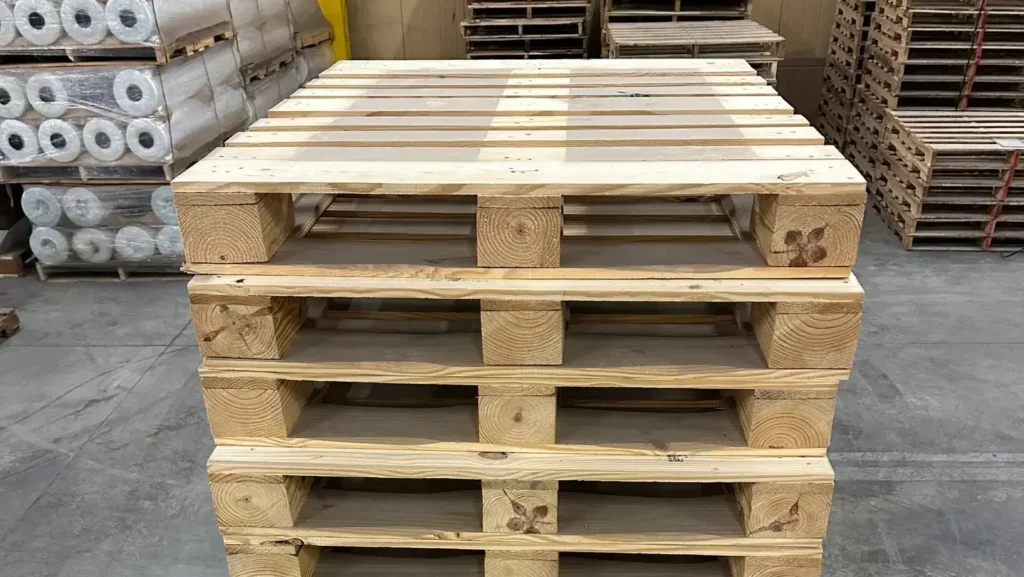
What Is ISPM 15? Complete Guide to Heat-Treated Wooden Pallets
When wooden pallets are used for international shipping, ISPM 15 pallets can be an important part of export compliance. ISPM 15 is an international phytosanitary standard designed to reduce the risk of pests being transported between countries through raw wood packaging materials.
For exporters, manufacturers, logistics companies and importers, understanding ISPM 15 helps prevent problems with wooden pallets at customs and border inspections. It also helps businesses select the correct pallets before preparing international shipments.
In this guide, we explain what ISPM 15 means, how heat treatment works, what the IPPC mark indicates, how ISPM 15 differs from EPAL certification, and what buyers should check before purchasing wooden pallets for export. ISPM 15 pallets
What Is ISPM 15?
ISPM 15 stands for International Standard for Phytosanitary Measures No. 15: Regulation of Wood Packaging Material in International Trade.
The standard is developed under the International Plant Protection Convention (IPPC). Its purpose is to reduce the risk that pests associated with raw wood packaging material will be introduced or spread through international trade.
The standard covers wood packaging materials such as:
- Wooden pallets
- Crates
- Boxes
- Dunnage
- Cases
- Cable drums
- Pallet collars
- Other wooden load-supporting or protective packaging
- ISPM 15 pallets
The IPPC explains that ISPM 15 applies to wood packaging material made from raw wood and excludes certain processed wood products that are manufactured in a way that eliminates the pest risk.
For businesses shipping goods internationally, this means the pallet itself can be subject to phytosanitary requirements even when the goods being transported are not.
Why Was ISPM 15 Introduced?
Raw timber can contain insects, larvae, fungi and other organisms capable of surviving inside or on wood.
When untreated wooden packaging moves between countries, these organisms can potentially be transported to new environments.
The purpose of ISPM 15 is therefore to establish internationally recognized phytosanitary measures for wooden packaging.
According to the IPPC, the standard provides a harmonized approach for countries to manage the pest risk associated with international movement of wood packaging material.
The system also makes international trade easier by allowing compliant wood packaging to carry a recognized treatment mark.
What Are ISPM 15 Pallets?
ISPM 15 pallets are wooden pallets that have been treated and marked according to the applicable requirements of ISPM 15.
The most commonly encountered treatment code is:
HT — Heat Treatment
The important point is that simply heating a pallet, drying timber, or purchasing a new pallet does not automatically make it ISPM 15 compliant.
The wood packaging must undergo an approved treatment under the applicable standard and be marked through the authorized system.
The IPPC standard specifies approved treatment methods and the requirements for applying the official mark.
What Is Heat Treatment?
Heat treatment is a phytosanitary treatment in which the wood is heated according to a prescribed time-and-temperature schedule.
Under the ISPM 15 treatment requirements, the HT treatment code is associated with achieving a minimum temperature of 56°C for at least 30 continuous minutes throughout the wood profile, including the core.
This is important because measuring only the temperature of the outside of a pallet is not sufficient.
The required treatment parameters concern the wood itself, including its internal temperature.
Heat Treatment vs Kiln Drying
Heat treatment and kiln drying are sometimes confused.
Kiln drying is primarily associated with reducing moisture content and improving timber stability.
Heat treatment under ISPM 15 is a phytosanitary treatment with defined requirements intended to address pest risk.
A kiln-drying process may potentially qualify as a heat treatment process when it achieves the applicable ISPM 15 treatment parameters, but ordinary kiln drying should not automatically be described as ISPM 15 treatment.
What Does the ISPM 15 Mark Mean?
A compliant wood packaging mark contains several important components.
The IPPC standard identifies the main components as:
- The IPPC symbol
- The country code
- The producer or treatment-provider identification code
- The applicable treatment code
- ISPM 15 pallets
For heat treatment, the treatment code is HT.
The exact format and authorization of the mark are controlled through the relevant national plant protection authority system.
The mark should be visible, legible and durable. It is not simply a label that a pallet seller can print and attach independently.
The IPPC documentation specifies requirements concerning the appearance, application and visibility of the mark.
What Does “HT” Mean on a Pallet?
If an authorized ISPM 15 mark contains HT, it indicates that the wood packaging has undergone the approved heat-treatment process associated with that treatment code.
For buyers, however, seeing the letters “HT” printed somewhere on a pallet should not by itself be treated as proof of compliance.
The complete official mark and its traceability information matter.
Businesses purchasing export pallets should therefore obtain pallets from an appropriate supplier and verify that the marking corresponds to the applicable national requirements.
ISPM 15 vs EPAL: Are They the Same?
No.
ISPM 15 and EPAL are different systems.
ISPM 15 is a phytosanitary standard concerned with the treatment and marking of wood packaging material for international trade.
EPAL is a pallet quality and exchange system covering standardized EPAL load carriers and their production, quality and identification requirements.
An EPAL pallet can also carry an ISPM 15 treatment mark where the applicable requirements are met.
Therefore:
EPAL does not automatically mean ISPM 15, and ISPM 15 does not automatically mean EPAL.
A generic 1,200 × 800 mm pallet may be suitable for export when appropriately treated and marked, but it should not automatically be called an EPAL pallet.
For standardized Euro pallets, see our Euro EPAL Pallets Portugal page.
Which Wooden Packaging Is Covered by ISPM 15?
ISPM 15 primarily concerns wood packaging material made from raw wood that could present a pathway for pests.
Examples include:
- Wooden pallets
- Box pallets
- Crates
- Cases
- Dunnage
- Wooden load boards
- Pallet collars
- Cable drums
- ISPM 15 pallets
The IPPC standard excludes certain wood products that have been processed sufficiently to eliminate the relevant pest risk, such as certain manufactured wood products.
Because national implementation can vary, exporters should always check the requirements of the destination country before shipping.
Are New Wooden Pallets Automatically ISPM 15 Compliant?
No.
A pallet being new does not automatically mean it is ISPM 15 compliant.
New wooden pallets can be produced specifically for export and treated according to ISPM 15 requirements, but the buyer should confirm the treatment and marking status.
For businesses that regularly export goods, it is useful to specify the requirement clearly when ordering:
New wooden pallets suitable for international export and compliant with applicable ISPM 15 requirements.
See our New Wooden Pallets page for standard and custom pallet requirements.
Can Used Wooden Pallets Be Used for Export?
Potentially, yes, provided the pallets meet the applicable requirements.
Used pallets can be suitable for export when their condition, treatment status and marking meet the destination requirements.
However, exporters should inspect used pallets carefully.
Check for:
- Valid and legible markings
- Broken boards
- Missing blocks
- Structural damage
- Excessive contamination
- Pest activity
- Severe moisture damage
- Unapproved repairs
- Modifications that affect compliance
- ISPM 15 pallets
ISPM 15 implementation guidance specifically addresses manufacturing, repairing and reusing wood packaging material.
See our Used Wooden Pallets page for information about used pallet supply.
What Happens If an Export Pallet Is Not Compliant?
The consequences depend on the importing country’s regulations and the circumstances of the shipment.
Possible issues can include:
- Inspection at the border
- Delays in cargo clearance
- Re-export or treatment requirements
- Destruction of non-compliant wood packaging
- Additional handling costs
- Replacement of pallets
- Delays in delivery
- ISPM 15 pallets
The IPPC provides implementation guidance covering import inspections and phytosanitary actions in response to ISPM 15 non-compliance.
For this reason, export pallet requirements should be confirmed before loading, rather than after the shipment has already reached the destination.
Does Every International Shipment Require ISPM 15 Pallets?
Not necessarily.
The exact requirements depend on the destination country, type of wood packaging, shipment and applicable phytosanitary regulations.
Many countries have implemented ISPM 15 requirements, but implementation details and exemptions can vary.
The IPPC maintains country-specific implementation information and resources for ISPM 15.
For an international shipment, exporters should therefore check:
- The importing country’s current phytosanitary requirements.
- Whether the shipment contains regulated wooden packaging.
- Whether ISPM 15 treatment is required.
- Which treatment methods are accepted.
- Whether the pallet markings meet the destination requirements.
- Whether additional documentation or procedures apply.
ISPM 15 Pallets for Export Shipping
ISPM 15 is particularly relevant for businesses shipping goods internationally by:
- Sea freight
- Container transport
- Road freight
- Rail
- Multimodal transport
- International distribution networks
Typical users include:
- Manufacturers
- Exporters
- Importers
- Logistics companies
- Freight forwarders
- Warehouses
- Distributors
- Machinery suppliers
- Food and beverage companies
- Automotive suppliers
- Industrial manufacturers
- ISPM 15 pallets
For export-focused pallet requirements, see our Export Pallets Portugal page.
Technical Summary of ISPM 15 Pallets
| Specification | ISPM 15 Requirement / Consideration |
|---|---|
| Standard | ISPM 15 |
| Responsible framework | International Plant Protection Convention |
| Main purpose | Reduce pest risks associated with international movement of wood packaging |
| Common packaging | Pallets, crates, dunnage, cases and other wooden packaging |
| Common treatment code | HT |
| Heat treatment benchmark | Minimum 56°C for 30 continuous minutes through the wood profile |
| Mark | Official ISPM 15 mark |
| Country identification | ISO country code |
| Producer/treatment code | Assigned through the applicable national system |
| Export use | Subject to destination-country requirements |
| EPAL relationship | Separate system; an EPAL pallet may also meet ISPM 15 requirements |
| Used pallets | May be suitable if compliant and in acceptable condition |
| Plastic pallets | Generally outside the raw-wood packaging scope of ISPM 15 |
The treatment requirements above are based on IPPC ISPM 15 documentation.
ISPM 15 Checklist for Exporters
Before loading goods on wooden pallets for international shipment, check the following:
1. Confirm the destination requirements
Do not assume that every country applies exactly the same rules.
Check the importing country’s current phytosanitary requirements.
2. Confirm the pallet material
Determine whether the packaging is made from raw wood or a processed material that falls outside the applicable scope.
3. Confirm treatment status
If ISPM 15 treatment is required, confirm that the pallets have received the appropriate treatment.
4. Inspect the official mark
The mark should be visible, legible and consistent with the applicable requirements.
5. Check pallet condition
Do not overlook structural damage simply because a pallet carries an ISPM 15 mark.
6. Check repairs
Used and repaired pallets should be assessed to ensure that treatment and marking requirements remain satisfied.
7. Confirm the shipment before loading
If the cargo is being exported commercially, resolve pallet compliance before the truck or container is loaded. ISPM 15 pallets
ISPM 15 and Plastic Pallets
Plastic pallets are fundamentally different from wooden pallets in this respect.
Because ISPM 15 regulates wood packaging material, plastic pallets do not normally fall within the same raw-wood treatment requirements.
This can make plastic pallets useful in certain international logistics systems where businesses want to avoid wood-treatment requirements.
However, the choice between plastic and wood should also consider:
- Load capacity
- Cost
- Reusability
- Nestability
- Rack compatibility
- Hygiene
- Storage
- Handling equipment
- Destination requirements
- Return logistics
- ISPM 15 pallets
For a broader comparison, read our guide to Plastic vs Wooden Pallets.
You can also see our Plastic Pallets Europe range.
Why Buy ISPM 15 Pallets from an Experienced Supplier?
Export pallets should be specified according to the actual logistics requirement rather than simply choosing the cheapest available pallet.
A suitable supplier can help buyers determine:
- Required pallet dimensions
- Load capacity
- New or used condition
- Export suitability
- Heat-treatment requirements
- Marking requirements
- Standard or custom construction
- Container loading requirements
- Delivery quantities
- ISPM 15 pallets
At Palmal – Paletes de Madeira, we supply wooden pallet solutions for logistics, warehousing, manufacturing and international export requirements.
Our range includes Wooden Pallets, Heat-Treated Pallets, ISPM 15 Pallets, industrial pallets, Euro pallets and custom pallet solutions.
Related Pallet Resources
For more information, explore:
- Wooden Pallets
- New Wooden Pallets
- Used Wooden Pallets
- Heat-Treated Pallets
- ISPM 15 Pallets
- Export Pallets Portugal
- Euro EPAL Pallets Portugal
- Industrial Pallets Portugal
- Wooden Pallets Portugal
- Plastic vs Wooden Pallets
- ISPM 15 pallets
Frequently Asked Questions About ISPM 15 Pallets
What does ISPM 15 mean?
ISPM 15 is an international phytosanitary standard governing certain wood packaging materials used in international trade. It establishes measures intended to reduce the risk of transporting pests through raw wood packaging.
What does HT mean on a wooden pallet?
HT means Heat Treatment. Under ISPM 15, the treatment is associated with achieving the required temperature and duration throughout the wood, including its core.
Are all wooden pallets ISPM 15 compliant?
No. A wooden pallet is not automatically ISPM 15 compliant simply because it is new, made from quality timber or manufactured in Europe. ISPM 15 pallets
The treatment and marking requirements must be satisfied where applicable.
Is ISPM 15 the same as EPAL?
No. EPAL and ISPM 15 are separate systems. An EPAL pallet can also be treated and marked according to ISPM 15 requirements, but the two terms do not mean the same thing.
Can used pallets be ISPM 15 compliant?
Yes, used pallets can potentially be used where they retain the required compliance and meet the destination country’s rules and condition requirements. Reused and repaired wood packaging is specifically addressed in IPPC implementation guidance.
Do plastic pallets need ISPM 15 treatment?
ISPM 15 concerns regulated wood packaging material. Plastic pallets therefore do not normally require the same wood treatment.
Is heat-treated timber automatically suitable for export?
Not necessarily. The relevant treatment must satisfy the applicable phytosanitary requirements, and the packaging must be properly marked where ISPM 15 applies.
Where can I check official ISPM 15 information?
The International Plant Protection Convention provides the official ISPM 15 standard, implementation resources and country-specific information.
You can consult the IPPC ISPM standards and the IPPC ISPM 15 implementation resources.
Conclusion
ISPM 15 pallets are an important consideration for international shipments using regulated wooden packaging.
The standard exists to reduce the risk of pests being transported through wood packaging material. Heat treatment, proper marking and compliance with the applicable national requirements are key parts of the system.
For exporters, the safest approach is to identify the destination requirements before purchasing and loading pallets.
If you need wooden pallets for international shipping, Palmal – Paletes de Madeira can supply pallet solutions for export, logistics, warehousing and industrial applications.
Request a quotation for your required pallet size, quantity, load capacity and destination.