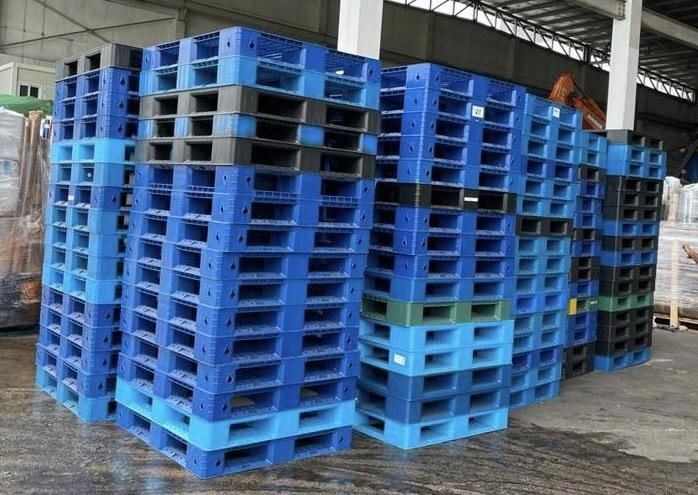
Are Plastic Pallets Suitable for Food and Beverage Logistics?
Plastic pallets for food logistics are widely used where hygiene, moisture resistance, cleaning and repeat handling are important. Compared with conventional wooden pallets, suitable plastic pallet designs can provide smooth, washable surfaces and consistent dimensions for food and beverage supply chains.
However, not every plastic pallet should automatically be described as food grade. The correct pallet must be selected according to its material, design, intended application, cleaning process, temperature conditions and the requirements of the particular food operation.
This guide explains how plastic pallets are used in food logistics, what buyers should check before purchasing, and how to select pallets for food processing, beverage distribution, cold storage and other hygienically controlled environments.
Why Are Plastic Pallets Used in Food Logistics?
Food and beverage supply chains can expose pallets to demanding operating conditions.
Pallets may encounter:
- Water
- Cleaning chemicals
- Refrigerated environments
- Freezer temperatures
- Food residues
- Frequent handling
- Warehouse wash-down
- Condensation
- Repeated transport cycles
- plastic pallets for food
Plastic pallet designs can be suitable for these environments because many are resistant to moisture and can be cleaned more easily than porous wooden surfaces.
Our food grade plastic pallets page provides more information about pallet solutions for food-related applications.
What Makes a Plastic Pallet Suitable for Food Logistics?
Several characteristics should be evaluated before selecting a pallet for a food operation.
These include:
- Material suitability
- Hygienic design
- Cleanability
- Resistance to moisture
- Structural durability
- Temperature suitability
- Load capacity
- Handling compatibility
- Intended use
- Cleaning procedures
- plastic pallets for food
A pallet should be selected according to the actual food application rather than simply choosing any plastic pallet.
Food Grade Does Not Mean Every Plastic Pallet Is Food Grade
One of the most important points for buyers is that plastic does not automatically mean food grade.
Plastic pallets are manufactured using different materials, formulations and designs.
When a pallet will be used in a food-related environment, ask the supplier for the relevant product information and documentation.
Depending on the application, this may include information about:
- Plastic material
- Intended use
- Food-contact suitability where relevant
- Cleaning procedures
- Temperature range
- Product specifications
- Applicable regulatory requirements
- plastic pallets for food
The exact requirements depend on how the pallet is used and whether the pallet itself comes into contact with food.
Hygienic Design of Plastic Pallets
A hygienic pallet should be designed to minimize areas where contamination can accumulate and to facilitate effective cleaning.
Potential design characteristics include:
- Smooth surfaces
- Rounded or accessible areas
- Reduced dirt traps
- Washable surfaces
- Consistent construction
- Drainage openings where appropriate
- plastic pallets for food
The actual hygienic performance depends on the specific pallet design and cleaning procedure.
See our hygienic plastic pallets page for more information.
Cleaning Plastic Pallets
One of the major reasons plastic pallets are considered for food logistics is their ability to be cleaned.
Depending on the pallet and facility, cleaning may involve:
- Water washing
- Detergents
- Sanitizing processes
- Automated pallet washing
- Manual cleaning
- Pressure washing
- plastic pallets for food
The cleaning method should always be compatible with the pallet manufacturer’s recommendations.
Important factors include:
- Water temperature
- Chemical concentration
- Cleaning pressure
- Drying
- Frequency of cleaning
- Pallet material
- Exposure time
- plastic pallets for food
A pallet should not be exposed to cleaning chemicals or temperatures outside its specified operating range.
Plastic Pallets and Moisture
Wood can absorb moisture, while many plastic pallet designs are inherently resistant to water.
This makes suitable plastic pallets useful in environments involving:
- Wet processing
- Refrigerated storage
- Food washing areas
- Beverage operations
- Cold-chain distribution
- Warehouse wash-down
- plastic pallets for food
However, moisture resistance does not eliminate the need for proper sanitation.
A pallet can still become contaminated through contact with dirty floors, equipment or products.
Plastic Pallets in Cold-Chain Logistics
Food and beverage products frequently move through refrigerated warehouses and cold-chain distribution systems.
Plastic pallets can be suitable for these applications, but temperature specifications must be checked.
Cold temperatures can affect the mechanical properties of plastics.
Before purchasing pallets for refrigerated or frozen environments, confirm:
- Minimum operating temperature
- Load capacity at low temperatures
- Handling requirements
- Storage conditions
- Cleaning requirements
- plastic pallets for food
A pallet that performs well at normal warehouse temperature should not automatically be assumed to have identical performance in a freezer.
Plastic Pallets for Freezer Applications
Freezer logistics can place additional demands on pallet materials.
Pallets may be exposed to:
- Very low temperatures
- Condensation
- Ice
- Repeated temperature changes
- Heavy loads
- Frequent forklift handling
- plastic pallets for food
If pallets will be used in freezer environments, the supplier should confirm that the selected pallet is appropriate for the operating temperature and load.
Food and Beverage Applications
Plastic pallets can be used in many parts of the food and beverage supply chain.
Potential applications include:
- Food manufacturing
- Beverage production
- Dairy logistics
- Meat processing
- Seafood distribution
- Fresh produce
- Packaged foods
- Bottled drinks
- Cold-chain logistics
- Food warehouses
- Distribution centers
- plastic pallets for food
The appropriate pallet specification depends on the individual application.
Food Processing
Food-processing facilities can have demanding cleaning requirements.
Pallets may move between:
- Production areas
- Storage areas
- Cold rooms
- Packaging areas
- Distribution zones
In these environments, buyers may prioritize washable designs with surfaces that are practical to clean. plastic pallets for food
Where the pallet is used in a controlled hygiene environment, the pallet specification should be compatible with the facility’s sanitation procedures. plastic pallets for food
Beverage Logistics
Beverage products can be heavy, making load capacity an important consideration.
A pallet may carry:
- Bottles
- Cans
- Beverage cartons
- Containers
- Packaged drinks
Buyers should calculate the maximum pallet load rather than relying on average shipment weight.
For detailed information about capacity, see our plastic pallet load capacity guide.
Food Warehouse Applications
Food warehouses may use pallets for:
- Floor storage
- Racking
- Order picking
- Cross-docking
- Distribution
- Cold storage
The storage system determines the pallet specification.
For example, a pallet intended for selective racking must have an appropriate racking load rating.
A general-purpose food pallet should not automatically be placed into racking unless its technical specification supports the application.
Our plastic pallets for warehousing and logistics page covers warehouse-oriented applications.
Solid Deck vs Ventilated Deck
Food logistics can involve different pallet deck designs.
Solid Deck Plastic Pallets
Solid decks provide a relatively continuous surface.
Potential advantages include:
- Easy cleaning
- Reduced openings
- Support for smaller packaged products
- Smooth surface
- plastic pallets for food
Solid decks can be useful where easy cleaning is an important consideration.
Ventilated Deck Plastic Pallets
Ventilated decks contain openings or channels.
Potential advantages can include:
- Lower pallet weight
- Drainage
- Air circulation
- Specific handling applications
The appropriate deck depends on the product and operating environment.
Plastic Pallets and Cross-Contamination
Using washable plastic pallets does not automatically prevent contamination.
Cross-contamination can still occur when pallets:
- Contact dirty floors
- Move between different hygiene zones
- Carry contaminated packaging
- Are stored improperly
- Are not cleaned correctly
Food businesses should therefore integrate pallet handling into their wider hygiene and sanitation procedures.
Dedicated vs Mixed-Use Pallets
Some businesses may use dedicated pallets for specific product categories or hygiene zones.
For example:
- Raw-food area
- Finished-product area
- High-care area
- Distribution area
- External logistics
A dedicated pallet pool can help organizations maintain greater control over pallet movements.
The appropriate approach depends on the facility’s food-safety procedures.
Are Plastic Pallets Better Than Wooden Pallets for Food?
There is no universal answer for every food operation.
Suitable plastic pallets can offer characteristics such as:
- Washability
- Moisture resistance
- Consistent dimensions
- Reusability
- Resistance to many common environmental conditions
Wooden pallets can also be used in many food supply chains, depending on the product, packaging, hygiene procedures and applicable requirements.
The appropriate choice should be based on the actual logistics process.
Compare the two materials in our plastic vs wooden pallets guide.
Food Grade Plastic Pallets vs Hygienic Plastic Pallets
The terms food grade and hygienic are related but should not automatically be treated as identical.
A food-grade claim may refer to the suitability of a particular material or product for a defined food-related application.
A hygienic pallet description may refer more broadly to design and cleanability characteristics.
Buyers should ask what the supplier’s specific claim means and request appropriate product information.
Reusable Plastic Pallets for Food Logistics
Food supply chains often involve repeated transport cycles.
Reusable plastic pallets can be suitable for closed-loop or controlled distribution systems.
Potential benefits include:
- Consistent dimensions
- Repeat handling
- Washability
- Moisture resistance
- Standardized logistics
- Reduced dependence on disposable packaging
The pallet should be selected for the required number of handling cycles and actual operating conditions.
Plastic Pallets for Food Export
Food exporters may use plastic pallets for international logistics.
Potential advantages include:
- No wood treatment requirement for the plastic pallet itself
- Consistent dimensions
- Moisture resistance
- Reusable designs
- Easy handling
However, exporters remain responsible for checking destination-country and carrier requirements.
See our export plastic pallets page for international logistics applications.
For official information about the international standard governing regulated wood packaging, consult the IPPC ISPM 15 standard.
Plastic Pallets for Meat and Seafood
Meat and seafood operations can involve moisture, refrigeration and intensive cleaning.
Pallet requirements may therefore include:
- Moisture resistance
- Easy cleaning
- Suitable low-temperature performance
- Load capacity
- Structural durability
- Hygiene-compatible design
The specific cleaning chemicals and procedures used at the facility should be considered when selecting the pallet material.
Plastic Pallets for Fresh Produce
Fresh produce logistics can involve:
- Moisture
- Condensation
- Refrigeration
- Frequent handling
- Short delivery cycles
- Washing and sanitation
Plastic pallets can be suitable for these environments when the pallet design and operating conditions are compatible.
Plastic Pallets for Pharmaceutical and Controlled Environments
Plastic pallets are also considered for certain pharmaceutical, healthcare and controlled logistics environments.
In these applications, buyers may have additional requirements relating to:
- Cleaning
- Traceability
- Material suitability
- Contamination control
- Temperature
- Validation procedures
The pallet supplier should be given the complete application requirements before selection.
Load Capacity for Food Pallets
Food-grade or hygienic characteristics do not determine load capacity.
A food pallet still needs to support the actual product load.
Before ordering, establish:
- Maximum load per pallet
- Static load
- Dynamic load
- Racking load
- Load distribution
- Pallet dimensions
- Handling equipment
For example, a beverage pallet carrying hundreds of kilograms of bottled products may need a substantially different specification from a lightweight pallet used for packaged food distribution.
Rackable Food Plastic Pallets
Food warehouses may use pallet racking to maximize available storage space.
If pallets are placed into racking, verify:
- Rack type
- Beam spacing
- Pallet dimensions
- Racking load
- Reinforcement
- Temperature
- Product weight
The fact that a pallet is food grade does not automatically mean that it is rackable.
The same principle applies in reverse: a rackable pallet is not automatically suitable for food applications.
Both requirements need to be satisfied.
Plastic Pallets for Automated Food Warehouses
Automated warehouses can impose additional pallet requirements.
Systems may use:
- Conveyors
- Automated storage and retrieval systems
- Roller conveyors
- Chain conveyors
- Automated guided vehicles
- Robotic handling
In these environments, dimensional consistency and underside design can be particularly important.
The pallet should be tested or specified for the equipment used by the warehouse.
Food Pallet Selection Checklist
Before purchasing plastic pallets for food logistics, confirm:
- Pallet dimensions
- Maximum load
- Static capacity
- Dynamic capacity
- Racking capacity if applicable
- Material specification
- Food-related suitability
- Hygienic design
- Cleaning method
- Chemical compatibility
- Temperature range
- Freezer suitability if required
- Forklift compatibility
- Pallet truck compatibility
- Conveyor compatibility
- Reuse requirements
- Export requirements
- Product documentation
Questions to Ask Your Pallet Supplier
When requesting a quotation, ask:
1. What material is the pallet made from?
The material specification can be important for the intended application.
2. Is the pallet intended for food-related use?
Ask for the relevant product documentation rather than relying only on the phrase “food grade.”
3. What is the cleaning procedure?
Confirm whether the pallet is compatible with your cleaning equipment, chemicals and temperatures.
4. What is the temperature range?
This is particularly important for refrigerated and frozen food logistics.
5. What is the load capacity?
Ask for static, dynamic and racking ratings where relevant.
6. Is it suitable for racking?
Do not assume that a hygienic pallet is automatically rackable.
7. Can it be reused?
For closed-loop logistics, ask about the intended service conditions and reuse characteristics.
Technical Comparison
| Requirement | Suitable Plastic Pallet Characteristic |
|---|---|
| Food processing | Hygienic, washable design |
| Beverage logistics | Appropriate load capacity and cleanability |
| Cold storage | Suitable low-temperature specification |
| Freezer | Verified freezer-temperature performance |
| Warehouse racking | Suitable racking load rating |
| Automated warehouse | Compatible dimensions and underside |
| Export | Suitable international logistics design |
| Repeated use | Reusable construction |
| Frequent washing | Washable design and compatible material |
| Heavy food loads | Appropriate dynamic and static capacity |
Plastic Pallet Types for Food Logistics
Different food operations can require different pallet designs.
| Food application | Potential pallet characteristics |
|---|---|
| Food manufacturing | Hygienic, washable |
| Beverage distribution | Heavy-duty, reusable |
| Meat processing | Washable, moisture-resistant, cold-compatible |
| Seafood | Hygienic, moisture-resistant, low-temperature suitable |
| Fresh produce | Washable, ventilated or solid deck depending on application |
| Frozen food | Freezer-compatible material and design |
| Food warehouse | Rackable or stackable depending on storage |
| Food export | Reusable/export-compatible design |
| Automated food logistics | Equipment-compatible dimensions |
These are general selection categories. The exact pallet should be selected based on the facility’s requirements.
Plastic Pallets for Food from Palmal
Palmal – Paletes de Madeira supplies plastic pallet solutions for food, beverage, warehousing, logistics, manufacturing and export applications.
Our related solutions include:
- Food Grade Plastic Pallets
- Hygienic Plastic Pallets
- Reusable Plastic Pallets
- Heavy Duty Plastic Pallets
- Plastic Pallets for Warehousing & Logistics
- Export Plastic Pallets
- Plastic Pallets Portugal
- Plastic Pallets Europe
When requesting a quotation, provide the product type, maximum pallet load, temperature conditions, cleaning requirements, storage method and delivery destination.
This allows the pallet specification to be matched to the actual food logistics application.
Frequently Asked Questions
Are plastic pallets suitable for food logistics?
Yes. Suitable plastic pallet designs are widely used in food and beverage logistics. The specific pallet should be selected according to material, hygiene, cleaning, temperature and load requirements.
Are all plastic pallets food grade?
No. A plastic pallet should not automatically be considered food grade simply because it is manufactured from plastic. Buyers should verify the specific product’s material and intended-use information.
Are plastic pallets easier to clean than wooden pallets?
Many plastic pallet designs have smooth, washable surfaces and are resistant to moisture, which can make cleaning more practical. Actual cleanability depends on pallet design and the cleaning process.
Can plastic pallets be used in freezers?
Some plastic pallets are designed for low-temperature and freezer applications. Confirm the manufacturer’s temperature specification before use.
Can food-grade plastic pallets be used in warehouse racking?
Only if the specific pallet is designed and rated for the intended racking system. Food suitability and racking suitability are separate requirements.
Are plastic pallets suitable for meat and seafood?
Suitable designs can be used for meat and seafood logistics, particularly where moisture resistance, cleaning and low-temperature performance are important.
Are plastic pallets suitable for beverage products?
Yes. Plastic pallets can be used for bottled, canned and packaged beverage logistics. The required pallet should be selected according to the maximum load and handling conditions.
Can plastic pallets be reused?
Yes. Many plastic pallets are designed for repeated logistics cycles. The appropriate reuse characteristics depend on the pallet model and operating environment.
Do plastic pallets require ISPM 15 treatment?
ISPM 15 applies to regulated wood packaging material. A plastic pallet itself is not wood packaging material and therefore is not subject to ISPM 15 treatment as a wooden pallet would be.
What should I tell a supplier when buying food pallets?
Provide the pallet dimensions, maximum load, temperature range, storage method, cleaning process, handling equipment, reuse requirements and delivery destination.
Conclusion
Plastic pallets can be a practical solution for food and beverage logistics where hygiene, cleanability, moisture resistance, consistent dimensions and repeated handling are important.
However, the term “plastic pallet” alone is not enough to establish suitability for a food operation.
Before purchasing, verify the pallet’s:
- Material
- Intended application
- Hygienic characteristics
- Cleaning compatibility
- Temperature range
- Load capacity
- Racking suitability
- Handling compatibility
- Reuse requirements
The correct pallet is the one whose technical specification matches the actual food logistics environment.
Need plastic pallets for food or beverage logistics? Contact Palmal – Paletes de Madeira with your required dimensions, load, application, temperature conditions and delivery location for a quotation.