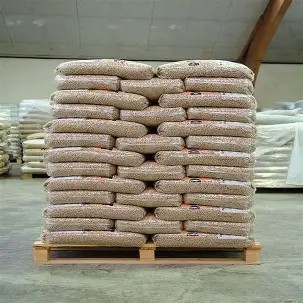
Softwood vs Hardwood Pellets: What Is the Difference?
When buying wood pellets for heating, one common question is softwood vs hardwood pellets: what is the difference?
Softwood pellets are made primarily from softwood species such as pine, spruce or fir, while hardwood pellets are produced from hardwood species such as beech, oak or similar hardwood feedstocks.
However, the type of wood does not by itself determine whether a pellet is high quality.
Pellet performance depends on several factors, including:
- Raw material
- Moisture content
- Ash content
- Bulk density
- Mechanical durability
- Fines
- Heating value
- Manufacturing process
- Storage
- Certification
- Heating appliance
- softwood vs hardwood pellets
For example, ENplus A1 is a pellet quality class, not a wood-species classification. ENplus A1 specifications define measurable requirements such as moisture, ash, mechanical durability, bulk density and net calorific value. softwood vs hardwood pellets
This means both softwood and hardwood pellets can potentially meet a high-quality specification.
What Are Softwood Pellets?
Softwood pellets are produced from softwood biomass.
Common softwood species used in pellet production can include:
- Pine
- Spruce
- Fir
- Cedar
- Other suitable coniferous species
The exact raw material depends on the manufacturer and available forestry or wood-processing residues.
Softwood generally has a different chemical composition and density from hardwood. These characteristics can influence the behavior of the raw material during pellet production and combustion.
Softwood pellets are widely used for:
- Residential heating
- Pellet stoves
- Pellet boilers
- Commercial heating
- Biomass heating systems
- Wholesale supply
- softwood vs hardwood pellets
See our Softwood Wood Pellets range.
What Are Hardwood Pellets?
Hardwood pellets are produced from hardwood biomass.
Common hardwood species can include:
- Beech
- Oak
- Ash
- Maple
- Other suitable hardwood species
As with softwood pellets, the exact raw material depends on the production process and feedstock source. softwood vs hardwood pellets
Hardwood pellets can also be manufactured to established pellet quality specifications and used in residential, commercial and industrial heating applications where appropriate.
The important point is that hardwood does not automatically mean higher quality, and softwood does not automatically mean lower quality.
The finished pellet’s measurable characteristics matter.
Softwood vs Hardwood Pellets: Quick Comparison
| Factor | Softwood Pellets | Hardwood Pellets |
|---|---|---|
| Typical raw material | Pine, spruce, fir and other softwoods | Beech, oak, ash and other hardwoods |
| Density of raw wood | Generally lower than many hardwoods | Generally higher than many softwoods |
| Pellet density | Depends on manufacturing | Depends on manufacturing |
| Heating value | Can be high | Can also be high |
| Ash | Depends strongly on feedstock and production | Depends strongly on feedstock and production |
| Resin content | Can be relatively higher | Usually lower than many softwoods |
| ENplus A1 possible? | Yes | Yes |
| Residential heating | Suitable where appliance permits | Suitable where appliance permits |
| Pellet stove use | Common | Common |
| Pellet boiler use | Common | Common |
| Quality determined by species alone? | No | No |
This comparison should be treated as a general description rather than a universal specification. Individual pellet products can differ substantially.
Is Softwood Better Than Hardwood for Wood Pellets?
There is no universal answer.
Softwood and hardwood pellets can both provide suitable heating fuel when they meet the requirements of the appliance and applicable quality specification.
The important comparison is the finished pellet, not simply the tree species.
Two pellet products made from different species can have similar:
- Moisture content
- Ash content
- Heating value
- Mechanical durability
- Bulk density
- softwood vs hardwood pellets
if they are manufactured to similar specifications.
Likewise, two pellets made from the same species can perform differently if their production quality and raw materials differ.
Softwood vs Hardwood: Heating Value
Heating value is one of the most important characteristics when evaluating wood pellets.
The amount of heat available from a given quantity of pellets depends on their chemical composition, moisture content and measured calorific value.
Research comparing pellets made from different wood species has found variation in heating values among both softwood and hardwood samples. One published study found that the measured ranges for the tested softwood and hardwood species overlapped, illustrating that species alone does not provide a reliable way to rank pellet energy content.
This is important because a common assumption is:
Hardwood always produces more heat than softwood.
That is too simplistic.
Pellet heating value should be evaluated from the actual product specification or test data.
Why Can Softwood Pellets Have High Heating Value?
Softwood can contain relatively high levels of extractives such as resins.
These components can contribute to the energy content of the raw material.
However, the final heating value is influenced by:
- Species
- Resin/extractive content
- Moisture
- Ash
- Processing
- Feedstock composition
This is why it is better to compare the manufacturer’s declared calorific value rather than assuming a value based solely on “softwood.”
For ENplus A1 pellets, the current ENplus specification requires a net calorific value of at least 4.6 kWh/kg as received.
Softwood vs Hardwood Pellet Density
Wood density and pellet bulk density are not exactly the same thing.
Wood density describes the density of the original timber.
Bulk density describes the mass of pellets occupying a given volume, including the spaces between pellets.
Manufacturing conditions affect pellet density and bulk density.
For ENplus A1 pellets, the current specification gives a bulk-density range of 600–750 kg/m³.
This means a buyer should not assume that all hardwood pellets are denser than all softwood pellets.
The finished pellet specification is more useful than the wood classification alone.
Softwood vs Hardwood Pellet Ash Content
Ash is the inorganic residue remaining after combustion.
Lower ash content can be useful for heating applications because it can reduce the amount of ash that needs to be removed from the appliance.
However, ash content is strongly influenced by the feedstock and contamination as well as the wood species.
For ENplus A1 pellets, the current requirement is:
Ash ≤ 0.70% on a dry basis.
Therefore, an ENplus A1 softwood pellet and an ENplus A1 hardwood pellet are both subject to the applicable A1 ash requirement. softwood vs hardwood pellets
The species label alone should not be used to predict ash production.
Softwood vs Hardwood and Resin Content
Softwood species can contain more resin and other extractives than many hardwood species.
During pellet production, these natural components can influence:
- Pellet binding
- Durability
- Energy content
- Combustion behavior
- softwood vs hardwood pellets
Natural lignin within wood also contributes to the binding of particles during pelletization.
However, the final pellet is a manufactured fuel, and its characteristics depend on the complete production process.
It is therefore difficult to predict finished-pellet performance from resin content alone.
Do Softwood Pellets Burn Hotter?
This is one of the most common questions.
Softwood pellets can have a high calorific value, and some softwood pellet products can deliver strong heating performance.
But saying that all softwood pellets burn hotter than hardwood pellets would be inaccurate.
Actual heat output depends on:
- Pellet heating value
- Moisture
- Feed rate
- Air supply
- Appliance efficiency
- Combustion settings
- Pellet quality
- Appliance condition
The correct way to compare products is to look at their actual technical specifications.
Softwood vs Hardwood for Pellet Stoves
Both softwood and hardwood pellets can be used in pellet stoves when they are compatible with the appliance.
Before buying, check the stove manufacturer’s requirements for:
- Pellet diameter
- Pellet quality
- Moisture
- Ash
- Certification
- Fuel type
- softwood vs hardwood pellets
Many modern pellet stoves are designed around standardized pellet dimensions and quality specifications.
ENplus certified pellets are subject to requirements covering characteristics such as diameter, length, moisture, ash, durability, fines, bulk density and calorific value.
Softwood Pellets for Pellet Stoves
Softwood pellets can be a suitable fuel for residential pellet stoves where the appliance accepts them.
Potential characteristics include:
- Good calorific value
- Consistent pellet dimensions
- Suitable mechanical durability
- Potentially good combustion performance
- Availability in standardized quality classes
- softwood vs hardwood pellets
The actual result depends on the specific pellet and appliance.
See our Heating Pellets page for heating applications.
Hardwood Pellets for Pellet Stoves
Hardwood pellets can also be suitable for pellet stoves where the appliance manufacturer permits them.
Potential characteristics include:
- Dense raw material
- Good mechanical properties
- Consistent combustion when properly manufactured
- Availability in different quality specifications
- softwood vs hardwood pellets
Again, the finished product’s technical data is more useful than the species label alone.
Softwood vs Hardwood for Pellet Boilers
Pellet boilers can also use either softwood or hardwood pellets depending on the boiler manufacturer’s requirements.
For larger systems, important parameters include:
- Heating value
- Moisture
- Ash
- Bulk density
- Mechanical durability
- Fines
- Pellet dimensions
- softwood vs hardwood pellets
For commercial and industrial users, consistent fuel characteristics can be particularly important because the heating system may consume substantial quantities.
See our Industrial Wood Pellets page.
Does Hardwood Produce Less Ash?
This is another claim that should not be generalized.
Ash content varies between individual raw materials and pellet products.
Some hardwood pellets may have low ash content, while some softwood pellets may also have very low ash content.
The relevant question is:
What is the measured ash content of the pellet you are buying?
For ENplus A1, the applicable ash threshold is ≤0.70% on a dry basis.
Therefore, certification and technical specifications provide a more reliable comparison than simply choosing hardwood because it is assumed to produce less ash.
Does Softwood Produce More Ash?
Not automatically.
Ash production depends on the actual pellet composition.
Potential influences include:
- Tree species
- Bark content
- Mineral content
- Soil contamination
- Raw material selection
- Production process
- Foreign material contamination
- softwood vs hardwood pellets
A well-manufactured softwood pellet can have low ash content.
Likewise, a hardwood pellet can have higher ash content depending on its raw material and production quality.
Softwood vs Hardwood: Moisture Content
Moisture is an important pellet quality parameter regardless of wood species.
Excess moisture can reduce the amount of useful energy available per kilogram and can affect pellet handling and combustion.
The current ENplus A1 specification sets maximum moisture at:
10% as received.
This applies to the certified quality specification rather than to a particular wood species.
Proper storage is also essential.
Even a high-quality pellet can be damaged by poor storage conditions.
Read our How to Store Wood Pellets Properly guide.
Softwood vs Hardwood: Mechanical Durability
Mechanical durability describes how well pellets resist breaking and generating fines during handling.
This matters because excessive fines can create:
- Dust
- Feeding problems
- Handling losses
- More cleaning requirements
- softwood vs hardwood pellets
ENplus A1 requires mechanical durability of at least 98.0% under the applicable test conditions.
Again, this is a property of the finished pellet.
It is not determined solely by whether the pellet is softwood or hardwood.
Softwood vs Hardwood and Pellet Fines
Fines are small particles generated during pellet production, transport and handling.
A high-quality pellet should maintain good mechanical integrity.
The current ENplus A1 specification sets a maximum fines content of 1.0% for bulk pellets and 0.5% for bagged pellets under the specified conditions.
For households buying bagged pellets, excessive fines can be an indication that the product has experienced excessive handling or has poor mechanical durability.
Softwood vs Hardwood: What About ENplus A1?
This is one of the most important points in the entire comparison.
ENplus A1 does not mean “softwood.”
And:
ENplus A1 does not mean “hardwood.”
ENplus A1 is a certified quality class with defined technical requirements.
The certification system evaluates characteristics such as:
- Moisture
- Ash
- Mechanical durability
- Fines
- Bulk density
- Calorific value
- Pellet dimensions
- Other chemical and quality parameters
- softwood vs hardwood pellets
Therefore:
Softwood + ENplus A1 = possible
Hardwood + ENplus A1 = possible
The quality class is determined by the applicable requirements, not simply the species of wood.
Can Softwood Pellets Be ENplus A1?
Yes.
Softwood pellets can be produced and certified as ENplus A1 when they meet the applicable certification requirements.
When buying certified pellets, buyers should verify the certification information rather than relying only on wording such as:
- Premium
- High quality
- A1 quality
- Certified quality
The official ENplus system provides certified-company information that buyers can use for verification.
See our ENplus A1 Wood Pellets page.
Can Hardwood Pellets Be ENplus A1?
Yes.
Hardwood pellets can also meet ENplus A1 requirements when the finished product satisfies the relevant specifications and the applicable certification requirements are met.
Again, the classification should be verified through the relevant certification information.
Softwood vs Hardwood: Which Has the Highest Heating Value?
There is no universal winner based solely on species.
Scientific measurements show overlapping heating-value ranges between tested softwood and hardwood pellets.
Actual pellet heating value depends on:
- Species
- Raw material composition
- Moisture
- Extractives
- Ash
- Manufacturing process
- softwood vs hardwood pellets
For purchasing purposes, compare the declared net calorific value rather than assuming one wood category always contains more energy.
Softwood vs Hardwood: Which Produces More Heat Per Kilogram?
The answer depends on the actual products.
A pellet with a higher net calorific value contains more available chemical energy per kilogram under the relevant measurement conditions.
For example, if:
Pellet A = 4.8 kWh/kg
and:
Pellet B = 4.6 kWh/kg
Pellet A has the higher declared energy content per kilogram.
The fact that one is softwood and the other is hardwood is secondary to the measured specification.
For ENplus A1, the minimum net calorific value is 4.6 kWh/kg as received.
Softwood vs Hardwood for Industrial Heating
Industrial users should focus on fuel consistency and system requirements.
Important considerations include:
- Heating value
- Moisture
- Ash
- Bulk density
- Pellet dimensions
- Fines
- Durability
- Delivery format
- Storage capacity
- softwood vs hardwood pellets
For industrial boilers, the appropriate pellet specification should be matched to the equipment and operating conditions.
A species label alone is insufficient to determine whether a pellet is appropriate.
See our Industrial Wood Pellets Portugal page.
Softwood vs Hardwood for Bulk Delivery
Bulk buyers should pay particular attention to:
- Bulk density
- Fines
- Moisture
- Delivery conditions
- Storage
- Silo compatibility
- Unloading system
- Fuel specification
- softwood vs hardwood pellets
ENplus A1 bulk pellets are subject to defined technical requirements, including bulk density and fines.
For larger quantities, see our Bulk Wood Pellets Portugal page.
Softwood vs Hardwood for 15kg Bags
For household heating, 15kg bags are a common format.
When comparing two products, look at:
- Certification
- Net calorific value
- Ash
- Moisture
- Mechanical durability
- Fines
- Pellet diameter
- Packaging quality
- Supplier traceability
- softwood vs hardwood pellets
Do not select a bag simply because it says “softwood” or “hardwood.”
The complete specification is more useful.
Softwood vs Hardwood Pellet Storage
Both types should be stored in a dry, protected environment.
Keep pellets away from:
- Rain
- Water
- Damp floors
- Leaking roofs
- Condensation
- Flooding
- softwood vs hardwood pellets
Storage conditions can affect pellet quality after purchase regardless of the original wood species.
See our complete wood pellet storage guide.
Softwood vs Hardwood: Environmental Considerations
The environmental profile of a pellet cannot be determined simply from the word “softwood” or “hardwood.”
Important factors include:
- Feedstock origin
- Forest management
- Production process
- Energy used during manufacturing
- Transport distance
- Packaging
- Storage
- End-use efficiency
- softwood vs hardwood pellets
The source and sustainability of the raw material therefore matter alongside the species.
Buyers should request appropriate product and supply-chain information when sustainability is a major purchasing criterion.
Softwood vs Hardwood: What Should You Check Before Buying?
Instead of asking only:
“Is this softwood or hardwood?”
ask for the complete specification.
1. Certification
Is the product actually certified under the claimed certification scheme?
2. Moisture
What is the declared moisture content?
3. Ash
What is the measured ash content?
4. Heating Value
What is the net calorific value?
5. Durability
What is the mechanical durability?
6. Fines
What is the fines content?
7. Bulk Density
What is the declared bulk density?
8. Diameter
Is the pellet 6 mm or 8 mm?
9. Packaging
Is it available in:
- 15kg bags
- Big bags
- Bulk
10. Certification Verification
Can the supplier’s certification status be verified through the certification scheme?
The ENplus scheme provides official resources for checking certified companies and pellet-quality requirements.
Softwood vs Hardwood Pellets: Technical Comparison
| Parameter | Softwood Pellets | Hardwood Pellets |
|---|---|---|
| Raw material | Softwood species | Hardwood species |
| Typical examples | Pine, spruce, fir | Beech, oak, ash |
| ENplus A1 possible | Yes | Yes |
| Heating value | Product-specific | Product-specific |
| Ash | Product-specific | Product-specific |
| Moisture | Product-specific | Product-specific |
| Bulk density | Product-specific | Product-specific |
| Mechanical durability | Product-specific | Product-specific |
| Fines | Product-specific | Product-specific |
| Stove suitability | Depends on appliance | Depends on appliance |
| Boiler suitability | Depends on appliance | Depends on appliance |
| Best comparison method | Technical specification | Technical specification |
Softwood vs Hardwood: ENplus A1 Reference Values
For buyers evaluating ENplus A1 pellets, the current published ENplus requirements include:
| Parameter | ENplus A1 |
|---|---|
| Diameter | 6 ± 1 or 8 ± 1 mm |
| Moisture | ≤ 10.0% |
| Ash | ≤ 0.70% |
| Mechanical durability | ≥ 98.0% |
| Bulk density | 600–750 kg/m³ |
| Net calorific value | ≥ 4.6 kWh/kg |
| Fines — bulk | ≤ 1.0% |
| Fines — bags | ≤ 0.5% |
These are ENplus A1 specification thresholds, not guarantees that every softwood or hardwood pellet automatically meets them.
Common Myths About Softwood and Hardwood Pellets
Myth 1: Hardwood Always Burns Hotter
Not necessarily.
Measured heating values vary between species and products, with overlapping ranges between softwood and hardwood pellets.
Myth 2: Softwood Always Produces More Heat
Not necessarily.
Heating value depends on the actual pellet composition and moisture content.
Myth 3: Hardwood Always Produces Less Ash
Not necessarily.
Ash depends on the feedstock and pellet specification.
Myth 4: Softwood Pellets Cannot Be ENplus A1
Incorrect.
Softwood pellets can meet ENplus A1 requirements.
Myth 5: Hardwood Pellets Are Automatically Premium
Not necessarily.
Quality should be assessed using measurable specifications and certification.
Myth 6: ENplus A1 Means Softwood
Incorrect.
ENplus A1 is a quality class, not a species classification.
Which Pellets Should You Choose?
The choice should start with your heating system and required fuel specification.
For a residential pellet stove
Check the stove manufacturer’s permitted pellet specifications, then compare certified products based on:
- Heating value
- Ash
- Moisture
- Durability
- Fines
- Price
- softwood vs hardwood pellets
For a pellet boiler
Pay particular attention to:
- Fuel specification
- Heating value
- Ash
- Storage
- Feeding system
- Manufacturer requirements
- softwood vs hardwood pellets
For industrial heating
Focus on consistent technical specifications, delivery format, storage and equipment compatibility.
For wholesale purchasing
Compare:
- Certification
- Product specification
- Packaging
- Quantity
- Delivery
- Supplier traceability
- Storage requirements
- softwood vs hardwood pellets
Softwood vs Hardwood Pellets: The Bottom Line
The difference between softwood and hardwood pellets starts with the raw material, but wood species alone does not determine pellet quality or heating performance.
Softwood pellets can have high calorific value and can meet ENplus A1 requirements.
Hardwood pellets can also provide high-quality fuel and can meet the same quality class.
For buyers, the more useful comparison is the actual pellet specification:
Moisture + ash + heating value + durability + fines + bulk density + certification + appliance compatibility.
If two products meet the requirements of your heating system, comparing their actual specifications and delivered price will give you a more meaningful basis for purchasing than choosing solely according to whether the pellet is softwood or hardwood.
Frequently Asked Questions
What is the difference between softwood and hardwood pellets?
Softwood pellets are produced from softwood species such as pine, spruce and fir, while hardwood pellets are produced from species such as beech, oak and ash. Their final performance depends on the actual pellet specification and manufacturing process.
Are softwood pellets better than hardwood pellets?
Neither type is universally better. The appropriate choice depends on the heating appliance, product specifications, certification, price and intended use.
Do softwood pellets have a higher heating value?
Some softwood pellets can have high heating values, but heating value varies between species and products. Scientific measurements show overlapping heating-value ranges for softwood and hardwood pellets. softwood vs hardwood pellets
Do hardwood pellets produce less ash?
Not automatically. Ash content depends on the specific raw material and manufacturing process. Check the product’s declared ash content.
Can softwood pellets be ENplus A1?
Yes. ENplus A1 is a quality classification based on specified pellet characteristics, not a softwood-only classification. softwood vs hardwood pellets
Can hardwood pellets be ENplus A1?
Yes. Hardwood pellets can meet the applicable ENplus A1 requirements when the finished product and certification status satisfy the scheme. softwood vs hardwood pellets
Which pellets burn longer?
Burn duration depends on pellet heating value, appliance feed rate, operating settings and heating demand. Wood species alone does not determine burn duration.
Which pellets produce the most heat?
Compare the actual net calorific value of the products. ENplus A1 pellets must meet a minimum net calorific value of 4.6 kWh/kg as received. softwood vs hardwood pellets
Which pellets produce the least ash?
Look at the actual declared ash content rather than assuming that softwood or hardwood automatically produces less ash.
Can I use softwood pellets in my pellet stove?
If the stove manufacturer permits the relevant pellet specification, softwood pellets can be used. Always follow the appliance manufacturer’s fuel requirements.
Can I use hardwood pellets in my pellet stove?
If permitted by the appliance manufacturer, hardwood pellets can be used. Check the pellet diameter and quality requirements before purchasing. softwood vs hardwood pellets
Are softwood pellets suitable for pellet boilers?
They can be, provided the pellet meets the boiler manufacturer’s fuel requirements.
Are hardwood pellets suitable for industrial boilers?
They can be, but industrial users should select pellets according to the boiler’s required specification rather than wood species alone.
Should I buy softwood or hardwood pellets?
Compare the actual product specifications, certification, appliance compatibility, price and availability. The species alone does not provide enough information to make the comparison.
Buy Softwood and Quality Wood Pellets
At Palmal – Paletes de Madeira, we supply wood pellets for residential, commercial, wholesale and industrial applications.
Explore our pellet range:
- Softwood Wood Pellets
- ENplus A1 Wood Pellets
- Wood Pellets
- Heating Pellets
- 15kg Wood Pellets
- Big Bag Wood Pellets
- Bulk Wood Pellets
- Industrial Wood Pellets
- Wood Pellets Wholesale
- Wood Pellets Portugal
- Heating Pellets Portugal
- Bulk Wood Pellets Portugal
- Industrial Wood Pellets Portugal
- Wood Pellets Wholesale Portugal
- softwood vs hardwood pellets
When requesting a quotation, provide your required pellet type, quality specification, packaging format, quantity and delivery destination. softwood vs hardwood pellets
Related Articles
- What Is ENplus A1? Complete Wood Pellet Certification Guide
- How to Store Wood Pellets Properly
- How Many Wood Pellets Does a Pellet Stove Use?
- Wood Pellets Portugal
- Heating Pellets Portugal
- Industrial Wood Pellets Portugal
- softwood vs hardwood pellets
Official Reference
For current ENplus quality requirements and certification information, consult the official ENplus Quality Scheme and ENplus Certified Companies. softwood vs hardwood pellets
The ENplus documentation specifies measurable pellet characteristics including moisture, ash, mechanical durability, fines, bulk density and net calorific value.